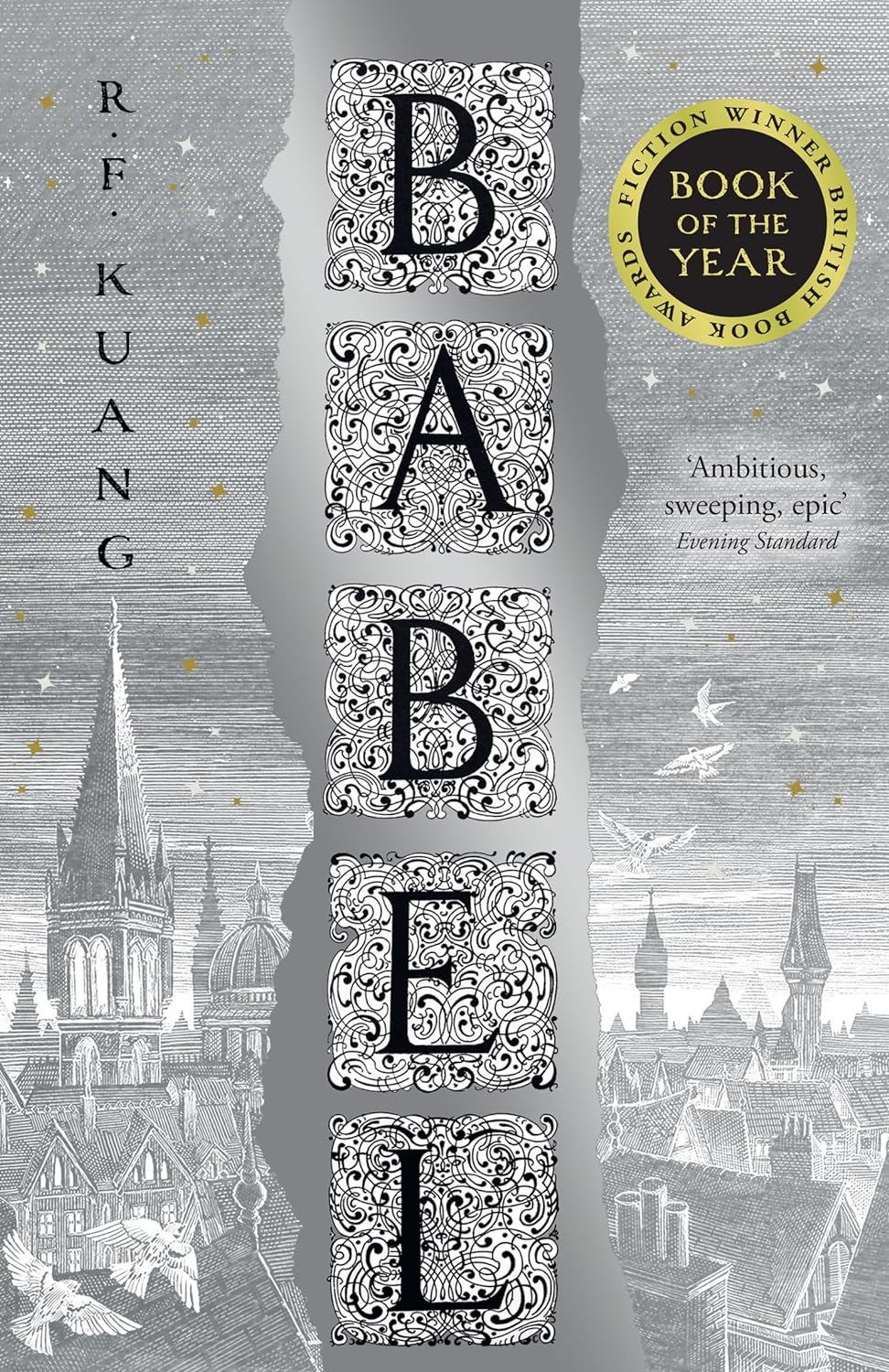
Really enjoyed that.
I had a lot of people tell me that they didn’t like this. But in contrast I had a lot of people tell me they loved it and I needed to read it asap.
Needless to say, I had put off reading Babel for a long while as I wasn’t sure what to expect from it.
On the surface, Babel is a story of language and words. There is such a grandiose focus on the power words have over time, and through cultures. As well as how their meaning changes and develops across the globe.
At its heart, however, Babel addresses the abuse of that language, and more so the exploitation of the races and cultures who helped to shape the very foundations of the English tongue.
There are, quite often, some very uncomfortable moments in Babel. Kuang addresses colonialism head on, and does not paint over the cracks that come at the oppressive hands of the British in the 19th century.
It is a very well told account of historic fantasy.
Kuang draws on so many real-world examples of how the diverse cultures of the British Colonial rule were oppressed, and weaves a fantasy and magical based system into it, which puts language at it’s core.
As someone who has a degree in Language and Literature, I found the use of etymologically charged magic fascinating. But I can completely empathise with anyone who found it a little dry, mundane or hard to grasp.
If you can get past the “Academia” of this Dark Academia story – of which there is a LOT of academic language – then I think you’ll love it.
I’d highly recommend Blood Over Bright Haven if you’re a fan of Babel. The two seem to compliment each other very well.
4.1/5.0

 Collecting And Reading
Leave a comment